Why Your Gi Smells Clean Until You Start Rolling
You wash your gi. You hang it. You sniff it. Passes the test. You roll into the academy, hit a few positions, and by the time you're working guard passes with your partner, they're definitely noticing something. By the end of training, the smell is unmistakable—not to you, because you're desensitized—but to everyone else.
This is the most common complaint in every BJJ forum, every training group message board, every academy wall. The mystery of the gi that smells clean until the moment it stops being clean.
The problem isn't your washing machine. It's not that you're not using enough detergent. It's that standard laundering is only addressing the surface of the problem—literally and chemically.
The Two-Stage Odor System
Your gi is housing a bacterial ecosystem that operates in two distinct phases: dormant and active.
When your gi is clean, dry, and hanging in your closet, the bacterial colonies embedded in the weave are largely inactive. This is because bacteria need moisture and warmth to metabolize and produce odor compounds. A dry gi is an inhospitable environment. The smell you're detecting—or rather, not detecting—isn't because the bacteria are gone. They're still there. They're just sleeping.
The moment you start rolling, everything changes.
Within the first few minutes of training, your body begins sweating. That sweat isn't just water—it contains urea (which bacteria convert into ammonia), amino acids, fatty acids, and salts. This flood of biochemical fuel activates dormant bacterial colonies throughout the gi. The moisture and warmth create optimal growth conditions. What was a dormant population of microorganisms becomes a rapidly metabolizing one, producing volatile compounds that create that distinctive gi funk.
By the end of a single roll, the bacterial population has essentially exploded. The smell isn't subtle anymore.
Your Detergent Is Fighting a War It Can't Win
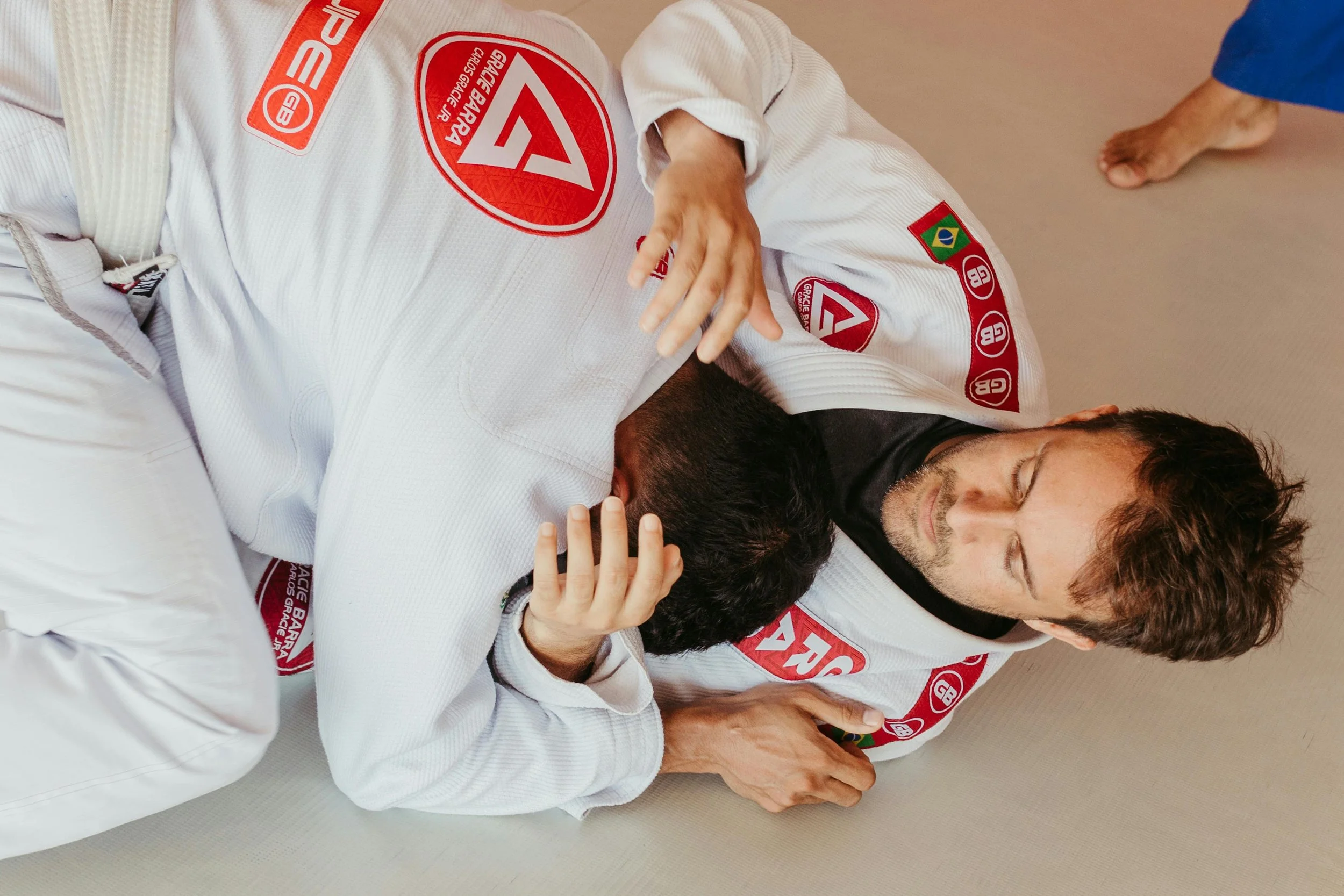
GRPL Soak is designed as a reset.
Gi/Rashguard funk is inevitable if your train hard enough
Standard detergent works through surfactants—molecules that reduce surface tension and lift oils and particulates away from fabrics. This works fine for your everyday clothes because those bacteria colonies haven't had time to establish a structured, fortified community.
But in your gi, bacteria don't exist as scattered individual cells. They exist as biofilm—a matrix of polysaccharides that acts like a shield, protecting the bacterial colony underneath from chemical attack. Biofilm is essentially a fortified bacterial city. The walls are biochemical, not physical, but they're just as real in terms of what can penetrate them.
When you run your gi through a standard wash cycle, the detergent removes loose debris and surface-level bacteria. But the biofilm-encased colonies deep in the cotton weave? They're untouched. They remain viable, dormant, waiting for the next training session to wake up and multiply.
This is why your gi smells clean. The surface is genuinely clean. The deep layers aren't.
Biofilm Reactivation: Why Heat and Moisture Are Your Enemies
Biofilm is remarkably resilient. It can survive detergent, resist antibiotics, and persist through standard washing. What it can't survive is sustained exposure to oxidative agents—chemicals that break down the polysaccharide matrix at the molecular level.
But here's the problem: standard washing doesn't give oxidative agents time to work. A typical wash cycle lasts 30-45 minutes, with much of that time spent on agitation and rinsing, not soaking. Even if there were enough oxidative power in the water, the contact time is too brief to penetrate deep into thick cotton weave.
Once the gi is dried and stored, the biofilm essentially enters suspended animation. The bacteria inside remain viable but metabolically quiet. Then you wear it, you sweat, and boom—activation. The bacteria sense moisture, warmth, and nutrients, and they begin exponential growth.
The "clean smell" you detected was never evidence that the problem was solved. It was evidence that the dormant bacteria were, well, dormant.
Why the Smell Seems to Come Out of Nowhere
One of the strangest aspects of gi odor is how suddenly it can manifest. You might notice your gi is perfectly fine for the first 10 minutes of training, and then it hits you—a distinct shift in how the fabric smells. This isn't gradual bacterial growth. This is a phase transition.
What you're experiencing is the threshold at which dormant bacteria have produced enough volatile organic compounds (VOCs) that your nose registers the smell as distinct from the surrounding air. Below that threshold, the bacteria are metabolizing and producing odors, but not in concentrations high enough to trigger your olfactory system. Once they cross that threshold, you notice.
The timeline varies based on how much biofilm is embedded in the gi and how quickly the training session warms up the weave. But the biological mechanism is always the same: bacteria awakening and rapidly reproducing.
The Sweat Factor: Why Your Gi Becomes an Incubator
Sweat is more than just water and salt. It's a complex mixture of compounds, and from a bacterial perspective, it's basically a five-star buffet.
Bacteria are attracted to urea (a nitrogen compound in sweat that they metabolize), amino acids, and fatty acids from your skin. These compounds are particularly concentrated in the areas of highest contact and friction—the armpits, the collar, the sleeves, the crotch area. These zones become bacterial hot spots because they have both biofilm anchors and a steady supply of nutrients.
The thick cotton weave of a gi actually amplifies this problem. The fabric doesn't just absorb sweat—it holds it in direct contact with millions of biofilm sites. A regular cotton t-shirt dries more quickly and has less surface area for bacteria to colonize. A gi, by design, is engineered to be durable and absorbent, which makes it a perfect incubator for dormant bacterial colonies.
The Disconnect Between Clean and Not-Smelly
This is worth stating clearly: a gi can be chemically clean (no dirt, no visible stains, no surface bacteria) while simultaneously housing millions of viable bacterial colonies in biofilm form deep in the weave. These are not mutually exclusive conditions.
Your nose isn't lying when you sniff the gi fresh out of the dryer and declare it clean. The surface is genuinely clean. But "clean" and "odor-free" are different things. One is a measurement of visible particulates and surface contamination. The other is about whether dormant pathogens exist in the fabric matrix.
Standard detergent is designed to solve the first problem. It does that job well. It's not designed to solve the second problem, and it can't, because it lacks the chemistry and contact time necessary to break through biofilm.
Why This Matters for Your Training Partners
It's easy to think of gi odor as a personal annoyance—something that's embarrassing or mildly unpleasant. But from a training perspective, it's worth thinking about as a sign that your gi is harboring active bacterial colonies that are probably also growing on your body during and after training.
These bacteria include Staphylococcus aureus (staph), Streptococcus, and other strains that can cause skin infections. These infections spread through direct contact in training. The fact that your gi smells is actually a sign that you're creating an ideal vector for spreading these bacteria to your training partners.
It's not about hygiene in the sense of being "dirty." It's about breaking a biological cycle that detergent alone can't address.
The Two-Phase Solution
True deodorization requires addressing the problem at two levels: breaking down the biofilm matrix that protects the bacteria, and then eliminating the organic matter (proteins and oils) that bacteria feed on.
This is why a two-phase approach works where single-step washing fails. The first phase uses oxidative chemistry to penetrate and break apart the biofilm structure. This requires sustained contact time—not the 45 minutes of a standard wash cycle, but a dedicated soak that gives the oxidative agents time to work their way into the deep weave.
Once the biofilm is compromised, the second phase can introduce enzymes that target the actual sources of odor: proteins from sweat and oils from skin. These enzymatic cleaners can now reach areas that were previously blocked by the biofilm shield.
This two-phase approach is the only method that addresses the root cause rather than just masking surface symptoms.
FAQ: Gi Odor Reactivation
Why does my gi smell fresh out of the dryer but stink 10 minutes into rolling?
The gi smells fresh because dormant bacteria embedded in the biofilm deep in the weave aren't metabolically active when the fabric is dry. Once you start sweating during training, you're providing moisture, warmth, and nutrients that activate these dormant colonies. They begin rapid reproduction and metabolic activity, producing volatile compounds that create the distinctive odor. This isn't a sign that your wash failed—it's evidence that standard detergent didn't eliminate the biofilm protecting the bacteria.
Can I fix this by washing my gi more frequently?
Washing more frequently will slow the problem but won't solve it, because standard detergent doesn't address biofilm. Washing more often is like treating a symptom rather than the disease. If each wash leaves biofilm intact, you're simply cycling between dormant and active bacterial states without ever eliminating the underlying colony structure.
Does the smell mean my gi is unhygienic?
Not in the traditional sense of being "dirty." Your gi can be microscopically clean and chemically free of surface contaminants while still housing dormant bacterial biofilms. These are two different conditions. The smell indicates that your fabric is harboring viable bacterial colonies that become active during training—which is a hygiene concern in terms of infection risk, but not a sign of poor washing technique with standard methods.
Is the smell permanent if I just use regular detergent?
Not permanent, but cyclical. Each time you wash with standard detergent, you remove some of the biofilm population and the surface bacteria, which is why the gi temporarily smells better. But because you never fully eliminate the biofilm matrix, the remaining bacteria re-establish and multiply during storage and training. The cycle repeats indefinitely unless the biofilm itself is targeted and broken down. Enter GRPL Soak. The reset soak protocol.